



Helpful Articles

Comparing Coding Styles for Plastic Tube and Metal Tube Sealing
January 10, 2024
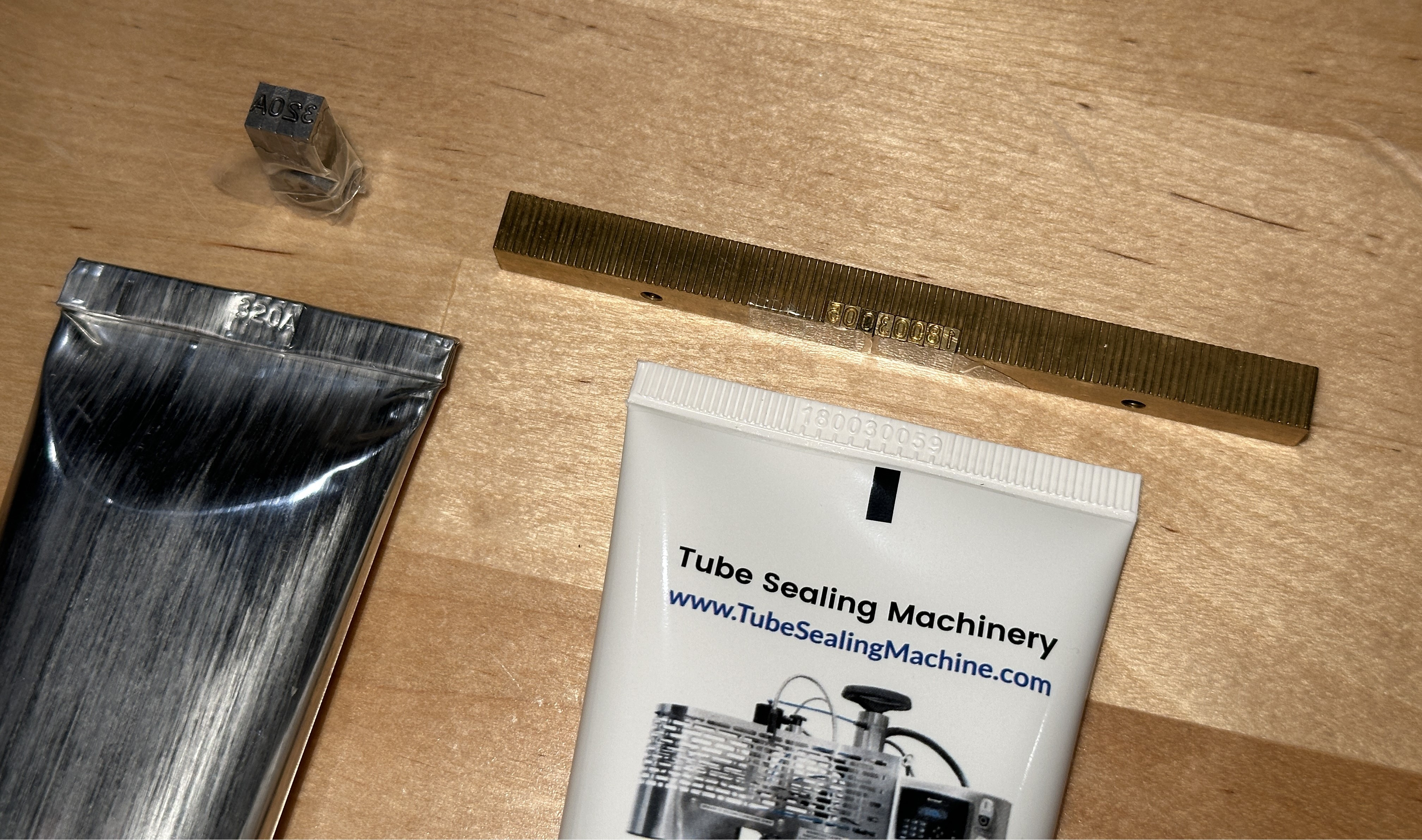
Coding tubes is an important step in the tube filling and sealing process for plastic, laminate, and metal tubes. Code on the seal of a tube often indicates batch number, expiration date, or even the machine that a particular tube was sealed with.
Plastic and Laminate Tube Coding
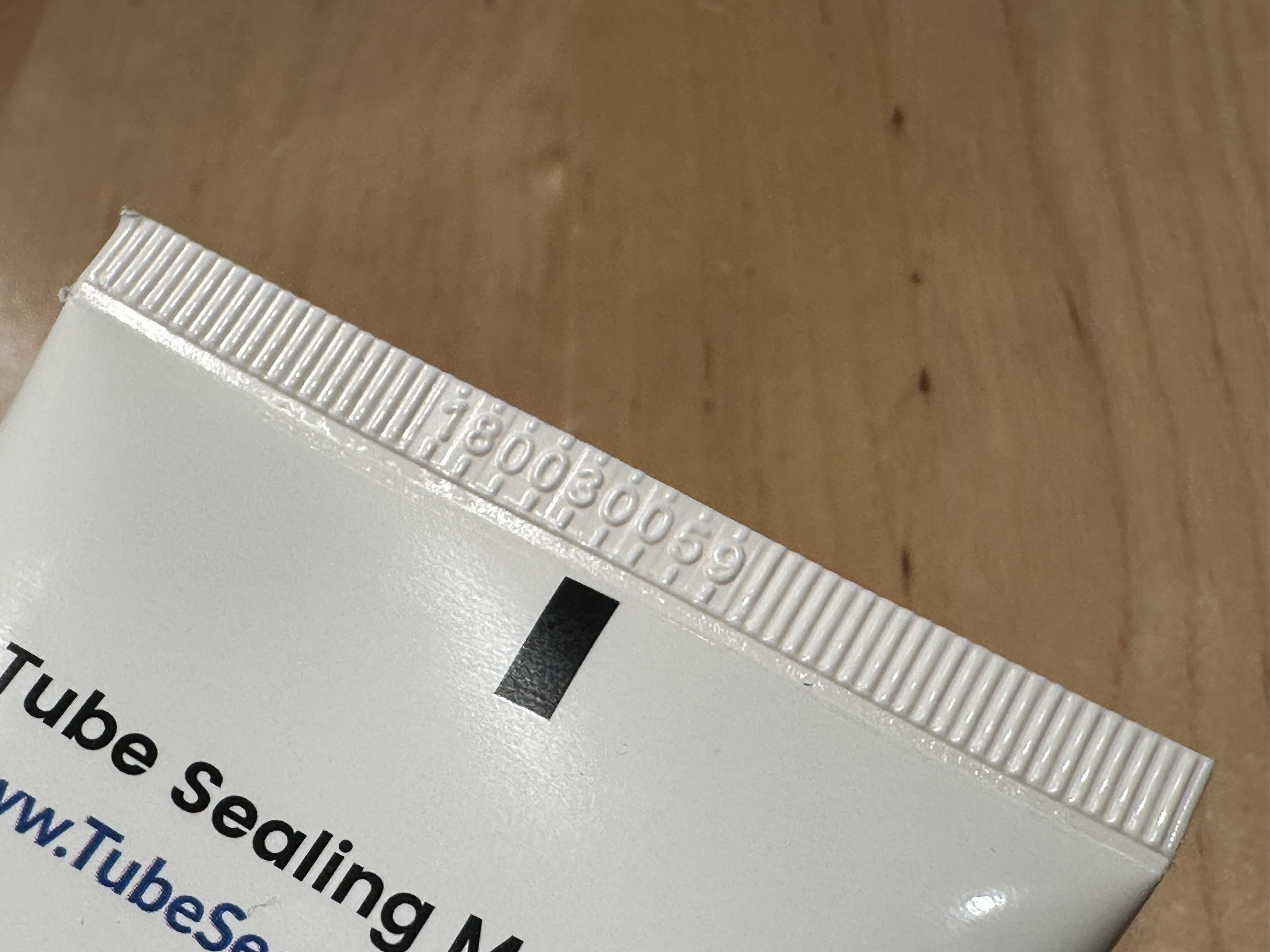
When plastic or laminate tubes are sealed using hot air sealing , a set of sealing jaws is used to press the tube closed after heating. These sealing jaws can have various patterns and spaces for coding characters. This allows the operator to easily customize the code for different product batches.
Plastic and laminate tubes will have embossed code visible on the tube seal, meaning that the code is raised above the surface.
Metal Tube Coding
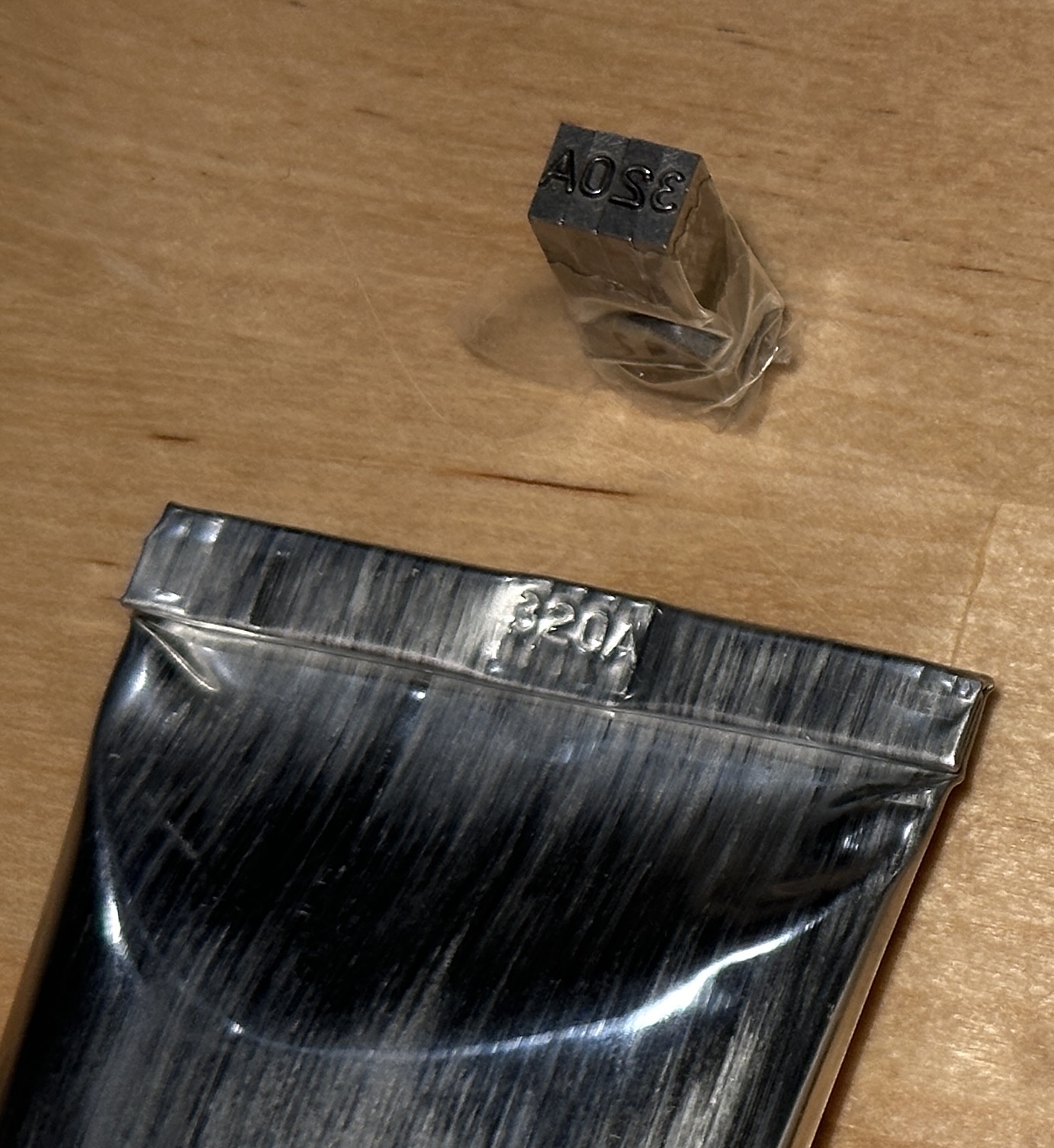
Aluminum tubes require a slightly different process when adding code. Since metal tubes are crimped with sequential steps of folding/crimping jaws, code characters are stamped into the seal at the next stage or during the final fold of the seal. It is also recommended to use a saddle fold style, especially if using double-sided coding. This fold style is stronger and thicker to protect the product.
Aluminum tubes have debossed code on the seal as opposed to embossed, meaning that the code is depressed into the tube seal.
Feel free to reach out and contact us with any questions.